
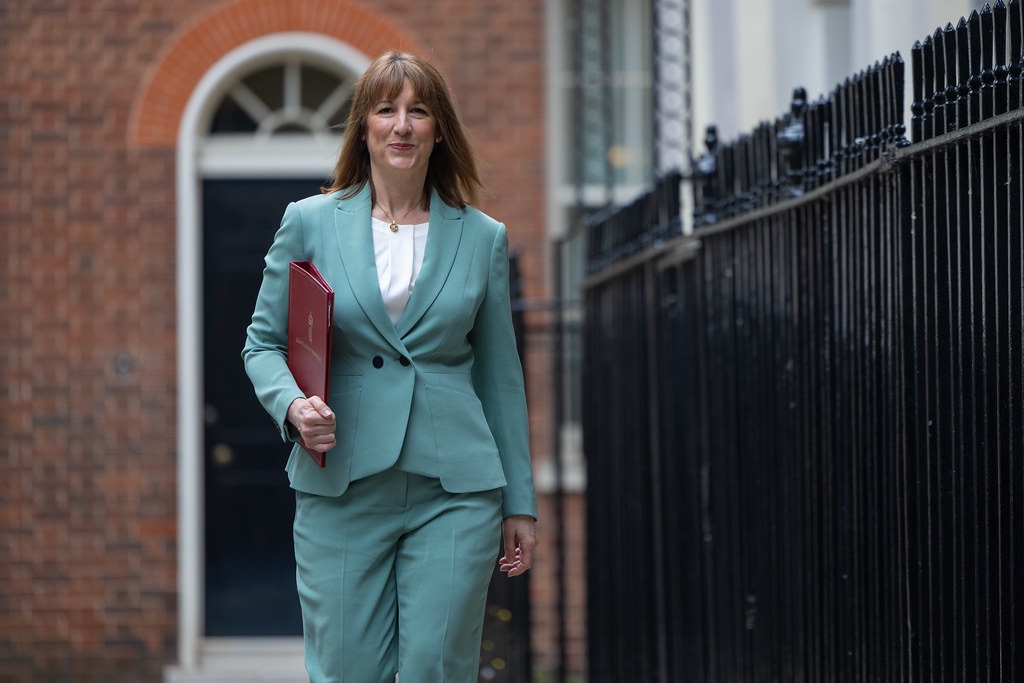
Rachel Reeves is unlike her predecessors as Chancellor of the Exchequer. Not only is she the first female Chancellor, but she is among few that can be legitimately called an ‘economist’.
Despite the scrutiny that her CV has come under in recent years, Reeves is one of the most economically qualified Chancellors to grace No 11, but has this supposed experience been reflected in her policies?
Like so many of her peers in the House of Commons, Reeves studied PPE here in Oxford, at New College, and involved herself in many aspects of student political life.
After Oxford, Reeves went on to work for the Bank of England in various roles, including some time spent as an economist, and during her “best part of a decade” at the Bank, she completed a masters degree in economics from the London School of Economics (LSE).
This economic pedigree has helped her cultivate an image of being a steady hand on the public finances and someone that puts creating stability through her fiscal rules above any strictly political desires.
But does this economic background actually translate into being a successful Chancellor?
The first argument in Reeves’ favour is the market support behind her. Few can forget the scenes of her crying in the Commons during PMQs when rumours were swirling about her job, but following assurances from Starmer that she would remain in post, the markets rallied behind her.
And on Budget day the cost of government borrowing fell after she delivered her second Budget, which introduced a raft of tax rises.
This leads us onto an argument against Ms Reeves, as for a ‘pro-growth’ Chancellor, she is not signalling this through her policies, especially the flagship policy of the first Budget – an increase to employer’s National Insurance contributions, which the Conservatives branded a ‘jobs tax’.
It does not take a great economist to see that increasing the cost of employing workers will lead to an increase in unemployment, increasing businesses’ costs will reduce their ability to invest and create growth, and anyone with an A-Level in economics would be familiar with the Laffer Curve which suggests that higher levels of taxation reduce economic growth.
But, you may say, ‘Rachel Reeves had to fill a £22bn black hole left by 14 years of Conservative government, she had no choice but to raise taxes!’ and I understand this, but one can question whether taxing businesses, and more specifically taxing jobs, was the best way to go about this.
Part of the reason that Reeves was ‘forced’ to introduce the increase in employer NI was the fact that the Labour manifesto included a pledge to not raise income tax, employee NI, or VAT – more recently termed ‘taxes on working people’ – which limited her options greatly.
But this commitment seemed to become irrelevant in the run-up to this budget where Reeves delivered a pessimistic ‘scene-setter’ speech where she prepared the British public and the markets for a rise in income tax due to a worsening economic environment and the prospect of concerning productivity forecasts from the Office for Budget Responsibility (OBR).
Of course, this income tax rise did not materialise and nor did the depressing forecasts from the OBR and it has been reported that Reeves knew this when she delivered the speech. This led to discussions that Reeves had misled the country – to the point where Nigel Farage asked for an inquiry to be launched into whether she breached ethics regulations.
For a political figure whose every word could trigger a market reaction, this is a precarious place to be. It can be debated why Reeves rowed back on the tax rise but a Chancellor who has faced many moments in which she has been forced into full or partial U-turns – Winter Fuel Payment, welfare reforms, and the reduction in the ISA limit – is one who is either facing a problem of confidence in herself or from her party.
Despite the criticism I have given Reeves so far, there have been some positive aspects of her Chancellorship: her spending decisions have allowed the two-child benefit cap to be lifted and for free breakfast clubs to be introduced, lifting over half a million children out of poverty; the Budget did include some pro-business measures; and households will benefit from a cut in energy bills worth £150 on a typical bill.
But despite these successes, Reeves does not give the impression of a Chancellor who is confident in her position; who has a clear vision for the country and what steps to take to get there; and who really knows what she is doing.
Instead, she looks like a Chancellor who is scrambling to make the numbers add up, who is trying to meet the need to control spending and achieve growth with the demands of the Labour back-benchers; and who is not acting like an economist with a plan.
I write this article as someone in the ever-shrinking camp of Rachel Reeves fans and I want her to do well as Chancellor, but I think it is fair to say that she has not met my expectations (or anyone’s for that matter). On The Rest is Politics, Reeves said she should be Chancellor because she thinks she would be “a good Chancellor” and that is telling of her lack of vision of how to run an economy.
Any good economist has an idea of how they think the economy should be run, when will we find out what Rachel’s is? Maybe then she will be the economist we were promised.
Do comment your thoughts below.


 Money and More
Leave a comment