
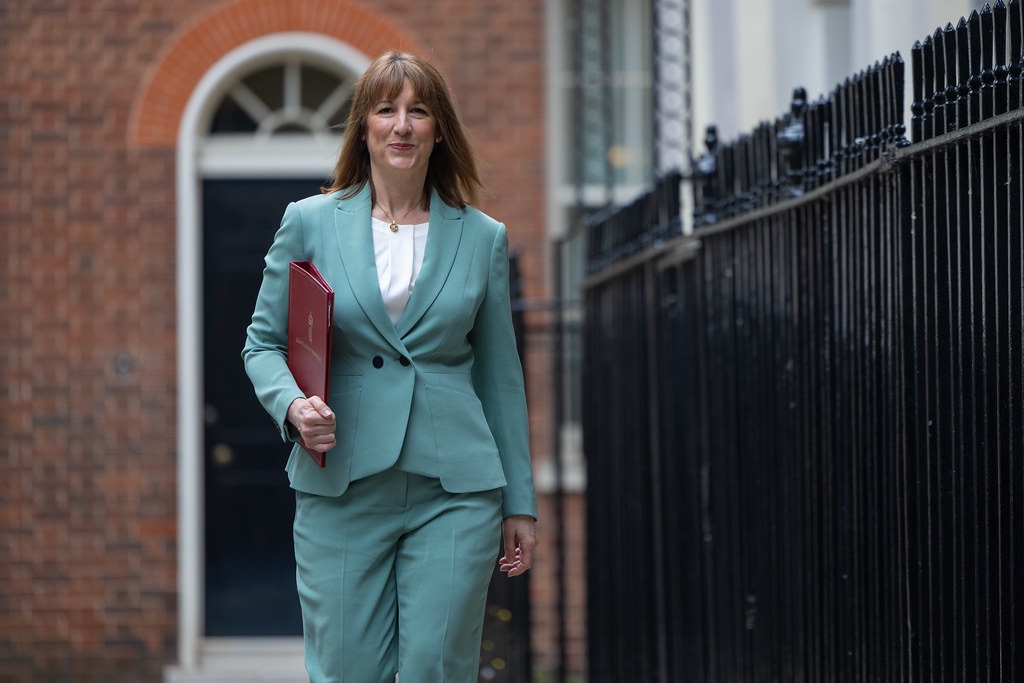
Rachel Reeves’ much-trailed and much-derided ISA plans have been pushed down the road (most likely until the Budget in the autumn) but after reiterating her commitment to using investment from individuals do boost growth in her Mansion House speech it leaves the question as to where we go from here?
And that question is far more interesting than one would expect a discussion on savings accounts to ever be as successive governments have tinkered with the rules surrounding tax-free savings and investments ever since the TESSA (the ISA’s predecessor) was introduced by John Major in 1990.
Before we dive into the nitty-gritty of ISA reform, we should first outline two things: what is an ISA and what was Rachel Reeves’ plan?
ISA stands for Individual Savings Account and is a way to invest or save without paying the relevant taxes (either income tax on interest or capital gains tax on dividends), with individuals being able to put £20,000 in an ISA each year.
ISAs come in four key flavours: the Cash ISA for savings; the Stocks & Shares ISA for investments; the Lifetime ISA for buying property; and the Innovative Finance ISA for investing in peer-to-peer lending.
All of these ISAs have their own uses and if you want to know which one would be best for you then read this for the basics of what ISA and this to learn more about the LISA and its predecessor, but now we all understand what an ISA is, let’s move onto how Rachel wants to meddle with them.
The problem with British savers (as Ms Reeves sees it), is that we are all a bit risk-averse: of the 22.3 million people who hold an ISA, 14.4 million have only a Cash ISA (AJ Bell, 2025) which presents an opportunity for the ISA mechanism to create growth if more people were to invest.
AJ Bell have done the numbers on this and with over 4.4 million adults holding in excess of £10,000 in a cash ISA and 3 million having over £20,000 without having any stocks and shares ISA investments, there is an estimated £100 billion that could be better utilised.
This makes perfect sense, the money that savers hold is far more use to the economy if it is invested into British businesses and may also yield a better return for consumers compared to savings been dumped in a low-paying account (the average rate of interest on a Cash ISA is 1.9% (Finder, 2025)).
Rachel Reeves’ solution to getting the 64% of ISA users to put money into stocks and shares is to reduce the amount that can be put into a Cash ISA to encourage people to put the money into stocks and shares instead with some reporting that the level for Cash ISAs could be as low as £4000.
In doing this, Reeves is deploying what is often called ‘nudge economics’, using government policy to try and change the public’s habitual behaviour to one that leads to a more optimal outcome – in this case, more investment for British firms and the hope of higher returns for savers.
The problem with Reeves’ idea was best termed by financial expert Martin Lewis who said, “this isn’t nudge economics, it’s likely just piss people off economics”. The reason for this slightly vulgar description is that the most likely effect of the change would be that savers would not suddenly open stocks & shares ISAs but would instead shift their money into normal savings accounts which once the interest earned is greater than the personal savings allowance would lead to their savings being taxed (a cynic may argue that this is an ulterior motive for the Treasury).
The fact is, British people are not investing because they do not know what they are doing and in a world full of jargon (I doubt the average man on the street knows their ETF from their ESG or their FTSE from their FWONK*) investing seems like too much of a step into the unknown – especially as the spectre of the 2008 financial crisis still looms large over the UK economy.
If you want to get people investing, you need to do two things: educate people on investing to make it seem less daunting, and provide some level of incentive to remove the inertia around savers becoming investors.
On the first point, Rachel Reeves and the FCA have made some headway as in June it was announced that there would be a shake-up to the financial advice market as firms would be allowed to give ‘targeted support’ to encourage savers to invest to get better returns.
But, in my opinion, that does not go far enough. Reeves said after her Mansion House speech that she will launch a Thatcher-style “popular capitalism” campaign to try and boost Britain’s appetite for investment in a similar way that ‘Tell Sid’ caused thousands to buy shares in newly-privatised firms though I doubt that will address the underlying problem.
Telling people that they can make a better return investing is not enough, we need a commitment to educate people on how to invest – be it though the Treasury paying social media creators to talk about investing, or a campaign across the newspapers with some government pieces on ‘investing explained’; or even doing workshops in schools to encourage the next generation of investors.
Whatever they choose, that is only part of the solution – you can give all the information you like but as the adage goes, you can take a horse to water, but you can’t make it drink, and without incentives people are unlikely to suddenly become investors.
Jeremy Hunt announced his idea on this which was a British ISA that would have its own additional allowance on the proviso that the extra allowance could only be invested in British firms.
That sounds great, but if we are doing this to try and encourage investing, it may be a product that is under-utilised (for context only 6% of eligible adults have opened a LISA (BBC News, 2025)) and the main benefit would be felt by wealthy individuals who simply put the extra money in to avoid tax (fine but not really helping the average consumer).
When ISA reforms became big news, I mused about taking the principles of the Lifetime ISA and the Help to Save scheme to incentivise people to invest with a bonus, an idea that Martin Lewis also put out there.
His idea is as follows: “Launch a new ‘starter investment ISA’. You can put, say, up to £1,000 in (whether lump sum or dripped in monthly) and, as well as it being tax-free, you’ll get, for example, a 5% boost on contributions from the state (with the cost split between investment providers and the state) as long as the money is kept in investments for a set time (for example, one year).”
The only tweak I would make to Martin’s idea is that the money must be put into British investments as that would also achieve Rachel Reeves’ overarching aim of boosting growth – the problem is that such a scheme would come at a cost and it is unlikely that the Treasury would back that (especially when her original idea may have generated some revenue).
So perhaps “Stop being negative about savers buying shares” is not miles off the mark, Rachel Reeves just needs to understand why savers are not buying shares and put in place some policies to make investing truly appealing – if anyone from HM Treasury is reading this, I’m happy to talk.
*ETF stands for exchange traded fund, ESG is environment & social governance, the FTSE is a index of the 100 biggest firms on the London Stock Exchange, and FWONK is the code for shares in the Formula One Group
Sources
AJ Bell data: https://www.ajbell.co.uk/group/news/isas-unpacked-who-holds-them-and-how-much-do-they-have
Finder data: https://www.finder.com/uk/savings-accounts/inflation-vs-savings
Martin Lewis quote: https://www.moneysavingexpert.com/news/2025/07martin-lewis-cash-isa-limit/
LISA data: https://www.bbc.co.uk/news/articles/cy0w8x2zxzko?app-referrer=deep-link
Martin Lewis proposal: https://www.moneysavingexpert.com/news/2025/07/martin-lewis-investment-isa/
 Money and More
Leave a comment