
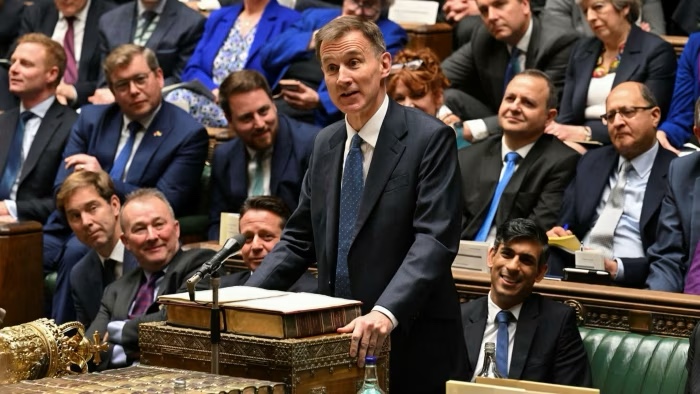
Earlier today, Chancellor of the Exchequer Jeremy Hunt delivered his Autumn Statement to the Commons and among the political spiel and economic updates there were some key points that have a real impact on our personal finances.
An awful lot was covered in Hunt’s speech (I made 6 pages of notes) and I haven’t included it all instead only focusing on the information that actually affects your day to day personal finances.
National Insurance & Income Tax
The big change is to National Insurance (NI), for those who aren’t aware NI is kind of a tax on work income that goes towards your state pension (you need 35 years of NI contributions to get the full state pension).
NI was set at 12% of income above £12,570 up to £50,270 (it’s at 2% above that) but has now been lowered to 10% of income above £12,570 up to £50,270 (it’s still at 2% above that) meaning that people effectively get more money in their take home pay.
In addition to this for employees, there have been cuts to NI for the self-employed as the class 2 NI band (a £3.45 payment per week to receive state pension entitlement) has been scrapped and class 4 NI on income above £12,570 has been reduced from 9% to 8%.
Income tax thresholds have been frozen which actually increases government tax revenue due to fiscal drag which is where more people are pushed into a higher tax bracket due to inflationary wage growth and therefore are paying more tax.
Pensions
Another key topic discussed in the Autumn Statement was pensions. Firstly, the triple lock agreement has been followed once again for the state pension. The triple lock agreement means that the state pension rises each year with the higher of 2.5%, average wage growth or inflation – this year the rise is 8.5% to £221.20 a week.
Another change to the world of pensions is that in the event you transfer jobs your new employer will be legally obliged to pay workplace pension contributions into your existing pension plan.
Benefits & Minimum Wage
There has also been changes to benefits in that Universal Credit (UC) and other benefits are going to rise by 6.7% (September’s inflation figure). Another important point is that those on UC who have not actively searched for a job in six months will have their benefits withdrawn.
Minimum wage (National Living Wage) has also risen by 9.8% to £11.44 per hour. This is the largest percentage rise that has been announced in the Autumn Statement showing that the government are focused on incentivising work.
ISAs
Some changes have been made to ISAs in that now the age to open a Cash ISA has been increased from 16 to 18 to align with the Junior ISA. You can also now use your Stocks & Shares ISA to invest in fractional shares (where you buy part of a more expensive share).
However, ISA allowances have been frozen and Lifetime ISA property thresholds remain unchanged which means that in a time of rising house prices some will be charged an effective penalty to access their money.
What did you think to the Autumn Statement?
Do comment your thoughts below.


 Money and More
Leave a comment