
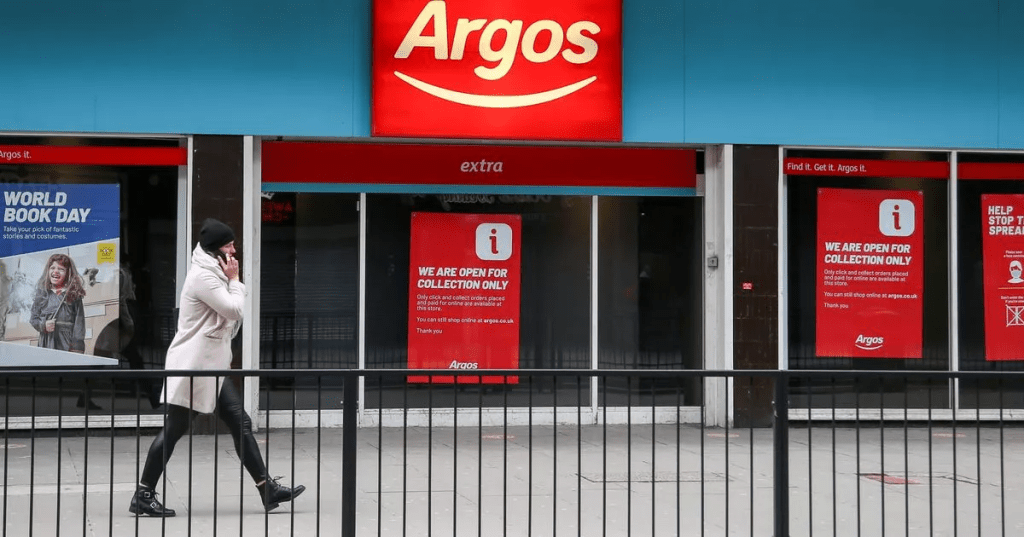
Imagine walking into a shop with nothing on the shelves, imagine being faced with a “laminated book of dreams” and a little pot of pencils to write some numbers corresponding to products, imagine sitting in a waiting room before you receive your purchase. It sounds distinctly peculiar but shoppers in Britain have been entering into this routine for 50 years with a company called Argos across their now 570 stores.
In 1973, Richard Thomson (the founder of Green Shield Stamps, an influential early loyalty scheme) opened a store based on the growing opportunity that was presented by the expansion of catalogue retail in the US. Argos set out with the intention to combine the convenience of shopping at home with the human contact of a local shop, an idea that truly has stood the test of time.
Despite Argos’ truly bricks and mortar roots, they were the force behind many business technological innovations that are taken for granted yet make online shopping as we know it possible.
An early development that Argos pioneered was recording data to monitor customer habits. If the antiquated in-store computer noted a particular product was out of stock but was demanded by customers, it would be recorded as a lost sale and the company would then automatically reorder the product and ensure it was distributed to that store more often in the future.
Argos was also one of the first UK retailers to move online in the early 1990s with its catalogue model and localised store distribution network leaving the business perfectly positioned to capitalise on the impending online revolution with argos.co.uk becoming the third most visited retail website in the UK.
Furthermore, Argos is one of the few companies who can actually beat Amazon when it comes to online deliveries with orders placed before 5pm delivered the same day due to its network of stores. Argos’ name originates from the Greek for ‘swift’ – clearly living up to that!
Another little known part of Argos is its many own brands, its ‘shelves’ are stocked with products from Alba, Bush, Chad Valley and many more brands which are own labels run by Argos to increase the selection available and profits made by the business.
However, times are changing for Argos and recent years have been tumultuous times for the business due to an acquisition and the axing of a ‘national treasure’.
In 2016, Argos was acquired by Britain’s second largest supermarket Sainsbury’s who hoped to capitalise on Argos’ logistical advantage and online technologies that are designed with customers in mind. This has led to many Argos stores shutting and being relocated to Sainsbury’s stores benefiting both businesses – lower costs for Argos and increased footfall for Sainsbury’s.
Another change that came was the death of Argos’ beloved catalogue nicknamed ‘the laminated book of dreams’ by comedian Bill Bailey. After 1 billion copies printed, the Argos catalogue was axed in favour of digital screens – definitely more efficient but so much less nostalgic.
After 50 years of success and growth in recent years under the custody of Sainsbury’s, Argos is in a prime position to thrive in the years to come. Whether its physical presence will diminish in years to come is unknown but being well placed for online will only have benefits for the retailer that has endured half a century of change.
Do comment your thoughts below.

 Money and More
Leave a comment