
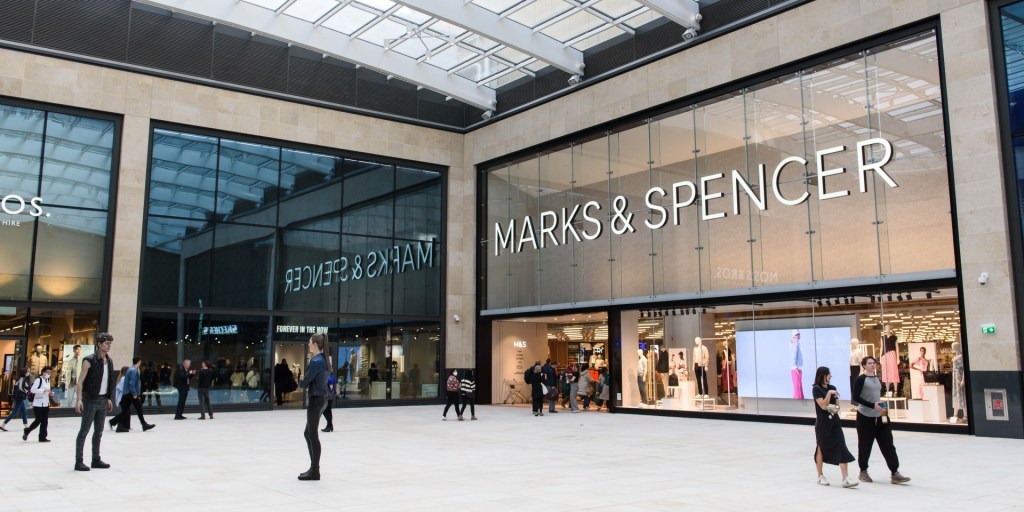
Marks & Spencer have announced that they will be closing 67 stores this year but many are wondering why. There are of course obvious reasons for this but is there anything lurking in the business that could explain it.
M&S was founded in 1894 by Michael Marks and Thomas Spencer in Leeds. Since then, they’ve expanded to being a bastion of British retail with 959 stores across the UK.
Throughout their history, M&S have been reasonably innovative with their products as they have introduced such things as the Chicken Kiev, Colin the Caterpillar, cold-chain transport and new fabric technology.
In more recent times, M&S have diversified their operations to include banking services and utilities while also shifting their retail focus towards food with 615 stores only selling food.
However, M&S have always positioned themselves towards the slightly higher end of the market meaning they are more likely to suffer from the adverse effects of the cost of living crisis.
In the last five years (barring the pandemic) M&S have been relatively consistent in terms of their financial performance.
In the 2018, 2019 and 2020 financial years, M&S’ current ratio has been around 2 (2.12:1, 1.73:1, 2.03:1) while their debt ratio stayed around 0.5 (0.45:1, 0.56:1, 0.52:1).
However, from the 2020 financial year onwards M&S began to show a less stable footing due to the severe impacts of the Covid-19 pandemic.
Their Net Profit Margin and Return on Capital Employed were down in 2020 and 2021 most likely due to the pandemic as in 2022 they returned to a more prosperous state (NPM: 0.24%, -2.20%, 2.84%; ROCE: 0.81%, -4.80%, 8.31%).
Although their profitability following the pandemic had returned to a more than normal level, the business is still more heavily leveraged than before due to the increased debt taken on in the lockdowns.
Their current gearing percentage (from the most recent financial statements) is 75.54%, an improvement from 83.98% at the height of the pandemic but still considerably worse than before suggesting the business is still recovering from the pandemic.
This could be part of the reason for the closure of stores as they try to get the business in a more stable position offloading some of the less profitable parts of their company.
In addition, in the current cost of living crisis even fewer people are shopping at large stores buying non-essential premium products further squeezing M&S’ operations.
Finally, more people are shifting away from visiting large stores in favour of shopping online. This is a further reason for shutting shops as they try to diversify themselves away from physical buildings.
A key part of this strategy is their acquisition of Ocado which will be the topic of ‘conversation’ next week.
Do comment your thoughts below.

 Money and More
Leave a comment