
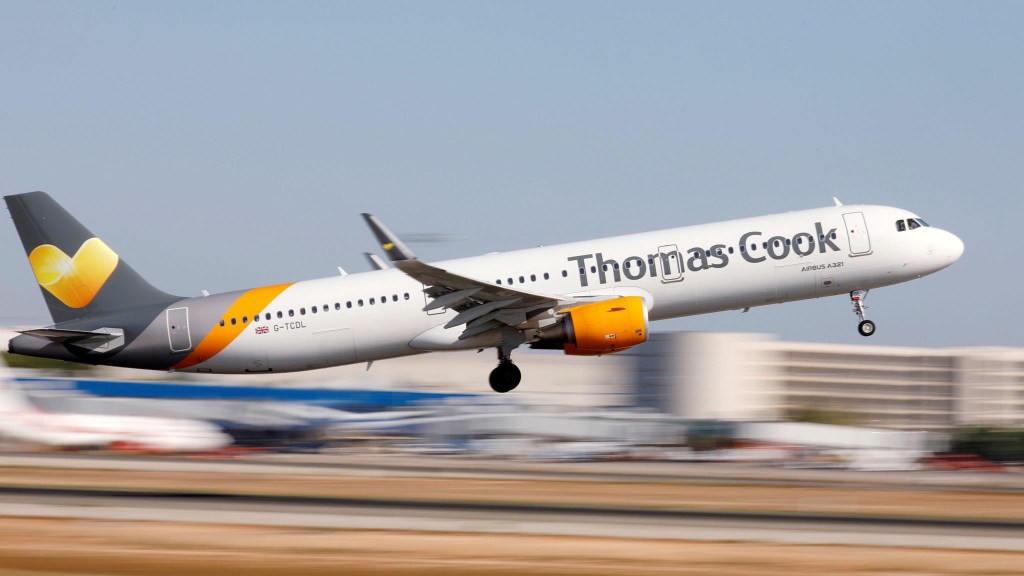
Thomas Cook: the bastion of British high street travel agents, the oldest holiday company in the world and a business that collapsed in 2019 as a result of severe financial issues.
The company was founded in 1841 by Thomas Cook in Leicestershire with its first organised excursion being a day trip from Leicester to Loughborough for a protest against alcohol.
178 years later, they grew to become one of the country’s leading travel companies and airlines owning 566 stores while serving almost 20 million travellers across 16 countries.
Despite having survived two world wars and innumerable notable events, there were serious underlying financial problems at Thomas Cook.
In the past decade, Thomas Cook had been on the precipice of collapse twice as the heavily indebted business struggled in a changing holiday market. In 2011, the company was forced to request an extra £100 million in loans from its creditors and banks and a year later had to sell planes and hotels as it once again found itself on the brink of bankruptcy.
In the years preceding this, Thomas Cook had thought they were in a buoyant position and acquired other travel businesses including the ill-fated MyTravel in 2007.
This merger ultimately cost the company £1.1 billion pounds as they soon realised the company they had bought had the same systemic issues that plagued their own organisation.
As the travel industry moved online and embraced modern technology, Thomas Cool were still bogged down by the high fixed costs associated with their many physical outlets meaning that the business was not particularly profitable.
In 2016, they had a net profit margin of 0.12% however two years later in 2018 that had fallen to -1.7% evidencing the fact that ever-increasing costs were taking their toll on Thomas Cook.
In addition to the new profitability problems they were facing, Thomas Cook were also in a dismal situation with regard to their liquidity. In the last four years of their operations, their average current ratio was 0.53: as they are a business that holds limited levels of stock, it shows their debts were an issue.
The company was beset by debt problems and repeatedly had to request additional support in the form of loans throughout the final years of its running.
Although their debt situation was improving slightly in the final few years, the sheer amount of borrowing was unsustainable. Thomas Cook had over a billion pounds in long term loans at the end which the business had no real means to pay off.
The company found itself in a situation where its gearing ratio was on average -86.33% over the last four years of operations meaning that the value of its long term debts was substantially more than the value held in the business.
However, despite the obvious dire effects of the financial predicament Thomas Cook found themselves in there were also external factors at play that contributed to its demise.
A reduction in consumer confidence affected the travel industry due to a terror attack on a tourist beach in Tunisia in 2015 and increasing uncertainty with regard to free movement after the UK left the EU.
These issues disproportionately affected Thomas Cook as they were already in a precarious position before external forces impacted the purchasing habits of their customers.
Additionally, a shift in the travel industry also had a negative impact on Thomas Cook as the rise of online services such as AirBnB which allowed customers to plan their own holidays without the need for a tour operator reduced the demand for the services of the traditional firm.
Despite the issues, the long history of Thomas Cook carried a certain degree of gravitas and they had a loyal customer base who were severely impacted by the collapse of the travel agent.
The UK Civil Aviation Authority ran the largest ever peacetime repatriation in an effort called Operation Matterhorn where all 140,000 Thomas Cook customers were returned home at the expense of the taxpayer.
Furthermore, the cost of refunding all of the Thomas Cook customers whose holidays could not go ahead and had ATOL protection reached £444 million as the reserves for this type of event were depleted.
Although the original company has long gone, the Thomas Cook brand still lives on after being bought by Fosun International for $14.4 million while the physical locations have been acquired by Hays Travel (who themselves have endured a tumultuous few years).
In conclusion, Thomas Cook was in part a victim of its own longevity – a business model that relied too heavily on physical locations and was slow to react to industry changes such as the shift to online. Although, the financial problems that befell the beleaguered company were as a result of their own mismanagement of the company finances with overpaid directors lackadaisical and blissfully unaware of Thomas Cook’s impending downfall.
Do comment your thoughts below.


 Money and More
Leave a comment