
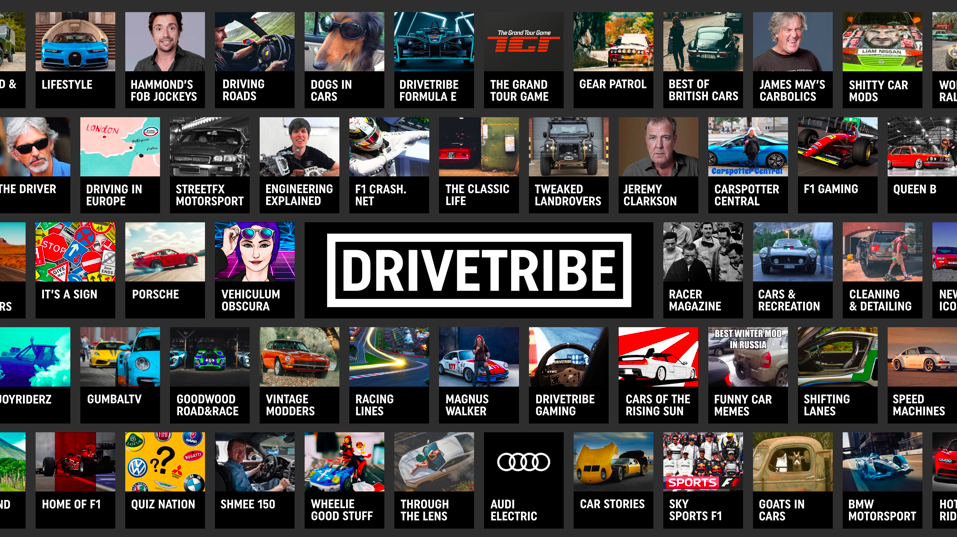
A year ago today, the digital content website DriveTribe shut down leaving millions of disappointed users in its wake. Despite a thriving community, behind the scenes the company ran by the Top Gear trio was in financial disarray but why did it fail? Could it have been saved? Or was it doomed from the outset?
Before we continue into the finer details of DriveTribe’s demise, you may be wondering what the website actually offered: it was a platform for amateur (and some professional) automotive writers and content creators to share their work with a wide audience and in some cases get paid for their endeavours (however in the end many did not receive payment).
The costs of the website were funded partially by advertising revenue and partially by subscription fees from users who paid to not see promotional material. Although DriveTribe had millions of active users, the vast majority did not subscribe to the service and in the most part they failed to attract lucrative sponsorship as the content on the website was at many times sub-par.
The former users of DriveTribe among you will most likely be aware that the brand lives on through a plethora of social media channels that provide automotive content however these are the works of a new business called DT Digital Ltd that was set up after the company that ran the old website – Digital Tribe Holdings – went into liquidation.
A key part of DriveTribe’s appeal was the strong sense of community it created with many users making friends through the platform. In the process of researching this article I reached out to a few former DriveTribe users and this is what they said:
Girl in the Pitlane: “DriveTribe … was quite sad when it closed … didn’t see it happening at all, so was a shock when I read the notice. I don’t think it failed, per se, but I think the reasons given about the challenges making it difficult to continue in the way it was were quite reasonable.”
Car Lover 33: ” I feel sorta .. emptier without it there’s not really anywhere I can post my spots where I can get a combination of likes, comments and community engagement in one…even they [other social media] don’t have the shining light DriveTribe did, it filled a hole in my heart”
Logan Page: “DriveTribe was the ultimate place on the internet for those who like cars from experts to beginners. From people who have a Fiat 500 to those who have Aston Martins, there was such a huge variety in age, gender, nationality, taste in cars, etc. Although it was a social media, it felt like a tight knit community and I genuinely made some friends on there which is something that I haven’t seen on any other social media.”
A few weeks before DriveTribe’s website closed, they posted an article making users aware of the closure and some very vague reasons as to why it happened.
The main reason they gave was the chip shortage affecting car manufacturers’ marketing budgets:
“For many months we’ve been facing significant industry challenges, which unfortunately aren’t going anywhere. The protracted global shortage of computer chips has caused a number of challenges for the automotive industry, and led to severe reductions in marketing budgets across the industry. This has made for an incredibly difficult operating environment for businesses like ours which are dependent on advertising.”
Later in the post they also partially blame the pandemic however this isn’t the full story.
Since at least 2017 (and probably before), DriveTribe had been losing millions of pounds every year and building up an increasingly crippling amount of debt.
In 2019 (the most recent published financial statements from Digital Tribe Holdings) the business posted a loss of over £3.5 million which equates to a net loss margin of -325.93%. The year before (2018) they had a net loss margin of -567.95%. These diabolical figures strongly indicate that the problems with DriveTribe extend well beyond the pandemic.
In their other financial statements (such as the balance sheet), the general picture is no less bleak. Digital Tribe Holdings had a debt to equity ratio of 1.87:1. although this figure could certainly be worse as the business did not own a considerable amount of tangible fixed assets it is far from an ideal position to be in.
Additionally, the low asset turnover ratio of 0.32:1 shows DriveTribe wasn’t run in a particularly efficient manner however the high amount of current assets partially explains this and also gives us a reason as to why Digital Tribe Holdings was a very liquid business (acid test ratio of 8.65:1).
The headline figures from this are – in short – that Digital Tribe Holdings was hemorrhaging money and making unsustainable losses (despite a 96% gross profit margin) while also not being sensibly run at the same time. The dire financial status put DriveTribe in a precarious position with the pandemic being the final, brutal nail in the coffin for their solvency.
The main reason DriveTribe were in this position was that their sources of revenue fell considerably short of the mounting costs. Few users paid for the subscription element of the service and the content generated by their amateur creators did not provide and enticing prospect for any business who wanted to align themselves with the site and place advertisements on there.
Another part of why DriveTribe ended up in such a dismal financial position was the enormous costs they were burdened with. The business was operated out of swanky offices in London while they employed 35 members of staff to keep the business running. These high fixed costs – along with the burgeoning expense of website hosting – led DriveTribe down a path that was unlikely to lead to profitability.
The financial problems endemic in DriveTribe were a key part of their issues and that was compounded by the pandemic as they had to secure another £2.5 million in loans. However, beyond the pure finances, there were other issues.
Firstly the lack of decent creators, most of the people who posted content on DriveTribe were teenagers who had nothing better to do. Some of this content was great however a lot was badly written meaning the site wasn’t really an alluring prospect for anyone.
Another issue they faced was what brought people in, the users didn’t come for some new social media, they came for Jeremy Clarkson, Richard Hammond and James May. These famous faces brought the punters in yet when they started to use the site less and less, one of the key attractions was no longer there.
In conclusion, DriveTribe had a great community and lots of loyal fans however people just using it doesn’t keep the lights on. As a company that seemed many years away from breaking even let alone profitability with unsustainable levels of debt it was destined to fail.
There was a clever idea in it – to connect the world’s car enthusiasts on one platform – the only problem was the people they had executing it didn’t do a particularly good job of managing the money leading (sadly) to DriveTribe’s demise.
Current and former employees of DriveTribe were asked for comment on this article but failed to respond.


 Money and More
Leave a comment